St. Helena
Feast day: Aug. 18
St. Helena, Roman empress and mother of the Roman emperor Constantine the Great, was born in the middle of the third century in Asia Minor or modern-day Turkey. Despite humble origins — according to one account, she worked as a stable maid — she was married to the young Roman official Constantius Chlorus and gave birth to their son, Constantine, in 272.
Constantius would go on to become one of the four tetrarchs ruling the Roman empire two decades later. For political reasons, he divorced St. Helena and married the more socially acceptable Theodora, the step-daughter of his patron, Emperor Maximinianus Herculius. Nevertheless, it was St. Helena’s son who became emperor when his father died unexpectedly in Britain in 306. As the new emperor, Constantine restored the name of his mother Helena, who became the empress dowager. But more importantly, under her son’s influence, St. Helena converted to Christianity at the age of 56.

St. Helena was known for her humility, generosity and service of others, particularly for her care of the poor. She also was involved in freeing prisoners and those sent to the mines or into exile. She generously supported the construction of churches in Rome and Trier, Germany, as she wanted to see Christianity flourish and spread. Her strong faith probably inspired Constantine to establish the Edict of Milan in 313, which allowed Christians to worship freely. In its celebration, St. Helena dressed modestly in order to join the crowds, and she fed the poor with her own hands.
Tragedy struck her family when Constantine ordered the death of his own son and that of his second wife. The ensuing unhappiness from this event inspired St. Helena to make a pilgrimage to the Holy Land in 326, where she ordered and oversaw the construction of the Basilica of the Nativity in Bethlehem and the Basilica of the Ascension on the Mount of Olives.
While in Palestine, St. Helena went in search of Christ’s tomb and his cross. Working with a local bishop and following the advice of locals, she oversaw the process of removing mounds of earth and destroying pagan buildings to find these precious relics. During the excavation, three crosses were found, and the identity of the one belonging to Our Lord was made clear either by an inscription found on it or by miracles associated with its touch. St. Helena had the Church of the Holy Sepulchre in Jerusalem built on the site where the three crosses were found.
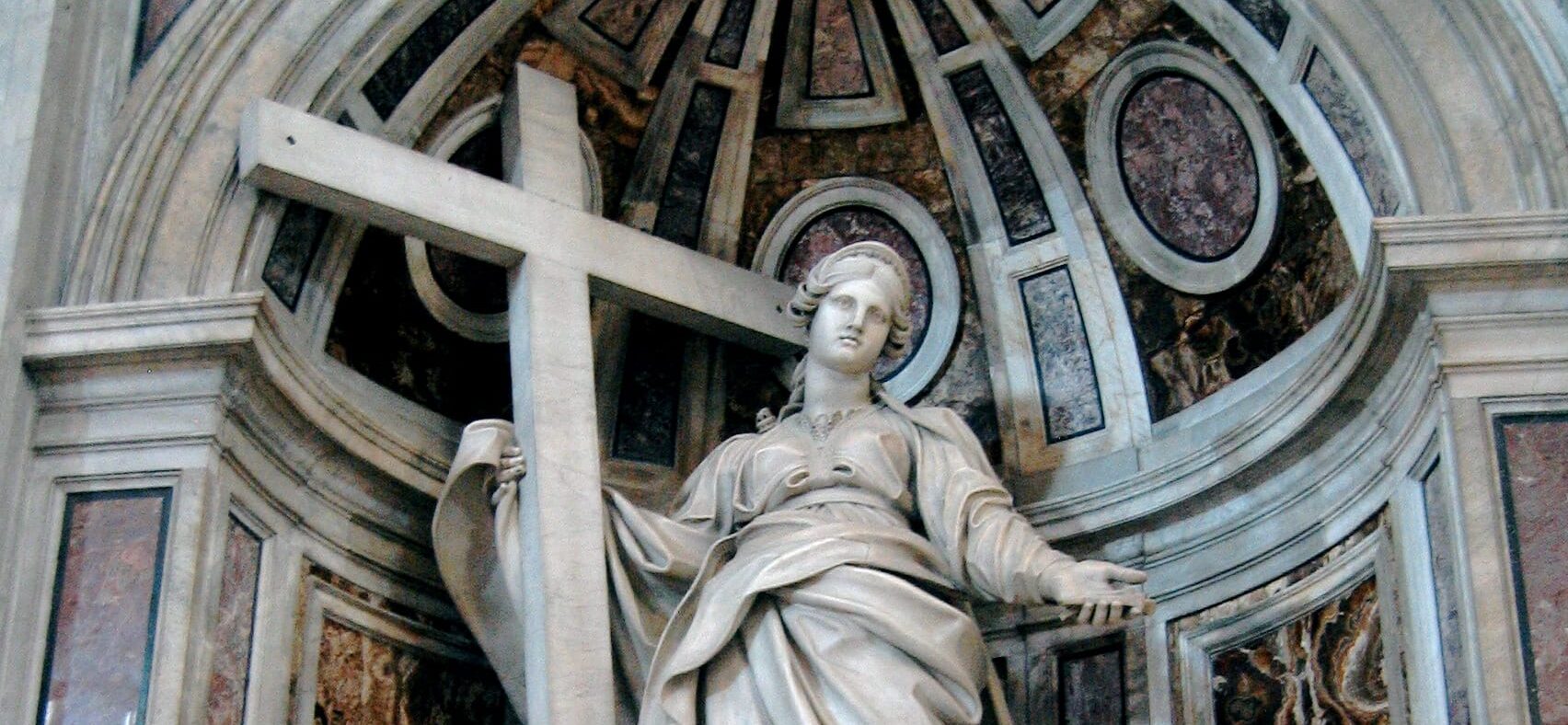
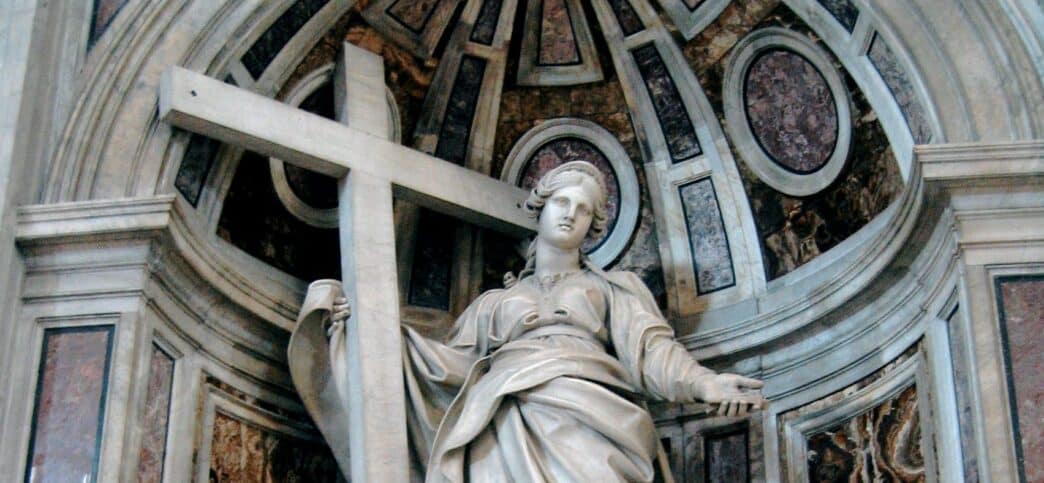
St. Helena gave to Constantine three nails from the Crucifixion. One is said to have been cast into the Iron Crown, which resides in the cathedral of Monza, Italy. Other relics of the Crucifixion are today in the Roman Basilica of the Holy Cross in Jerusalem. St. Helena died in approximately 330 and was buried on the ancient Via Labicana road in Rome. It is presumed that her remains were transferred in 849 to the Benedictine abbey of Hautvillers in northeastern France. Together with Sts. Andrew, Veronica and Longinus, St. Helena is honored with a massive statue in a niche beneath the great dome of St. Peter’s Basilica in Rome.
Reflection
Dear Lord, increase my faith and love for you during difficult times, that I may accomplish good for your Church. May I, like St. Helena, conquer evil with good.
Prayer
O God, who alone are holy and without whom no one is good, command, we pray, through the intercession of blessed Helena, that we be numbered among those who do not deserve to be deprived of your glory. Through our Lord Jesus Christ, your Son, who lives and reigns with you in the unity of the Holy Spirit, God, for ever and ever.