
Wood doesn’t last forever. That’s one of the things Andrew Coleman likes about it.
“God’s the one who made wood. Its properties are what they are because he made it that way,” said Coleman, the artist and owner of Coleman’s Handcrafted Sacred Art and Fine Woodworking.
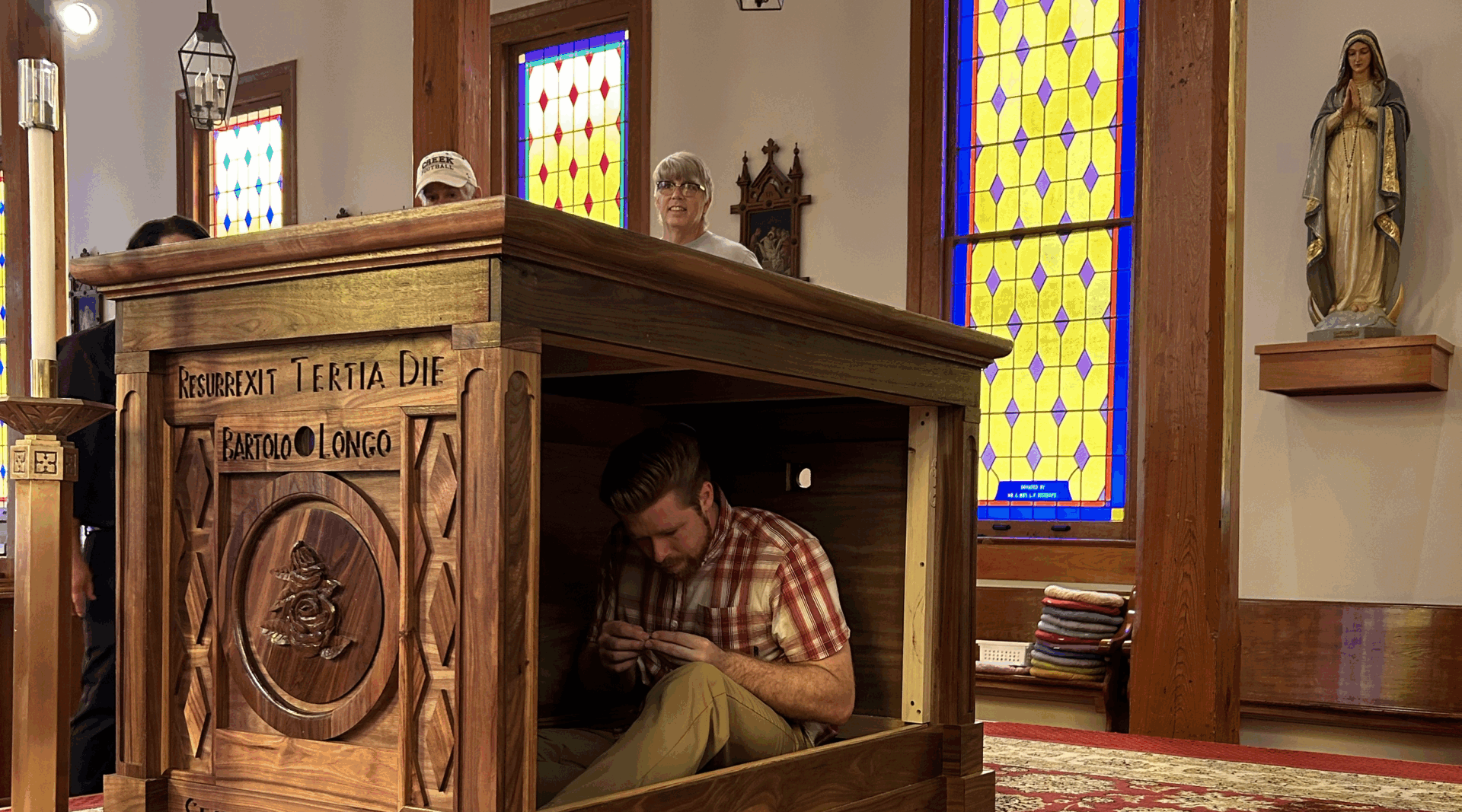
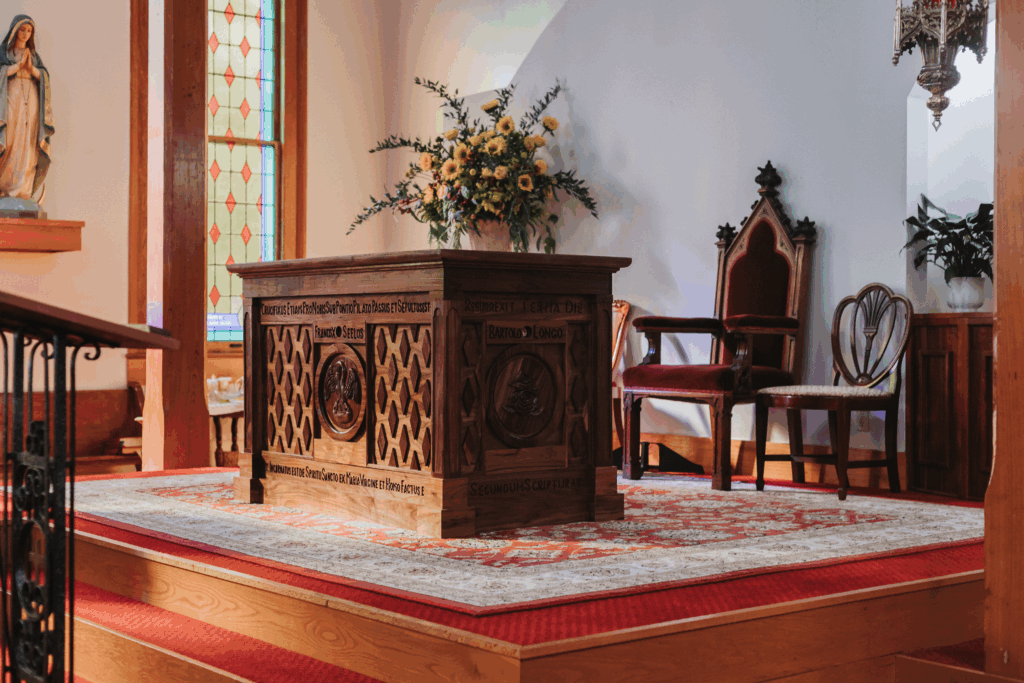
Even a substantial and ornate wooden altar, like the one he built for Our Lady of Mount Carmel in St. Francisville, Louisiana, doesn’t have the lifespan of stone or metal — especially in humid south Louisiana, where Coleman’s workshop is based. But that’s not necessarily a flaw.
Some parts of the church will last for thousands of years; some of it is designed more for the here and now. That’s true for church buildings and for the Church as an institution.
“Even if you’re going to have a church built out of marble, you can’t do it without the use of wood,” Coleman said. You need both, and there’s a wider lesson about complementarity there.
This meeting of the eternal and the temporal gets played out throughout salvation history: Some of the things God does are permanent and unchangeable; some of them are meant for a specific time and place. Coleman, who founded the company with his wife, Ashley, four years ago, tries to keep both the temporal and the eternal in mind as he works.
A hobby becomes a livelihood
After studying in seminary for a year, Coleman discerned he was meant for married life — specifically, marriage to Ashley, whom he’d known since they were kids growing up in Baton Rouge. His main goal, early on, was just to support a family, so he took a job as a salesman at a septic company owned by a fellow daily Massgoer. The job wasn’t glamorous, but it paid the bills.
But he did long to serve the Church more directly. He’d always been interested in woodworking, ever since he built a kneeler in shop class, and gradually he began to spend more and more time woodworking as a hobby. When his pastor at Sacred Heart of Jesus Parish in Baton Rouge said the church’s altar rails needed restoring, he made the time to get it done.

That part-time project changed his life. A friend of the pastor who was visiting saw his work and was so impressed that he asked Coleman to build the entire sanctuary for a new church they were building in Alabama.
“It was a jump! It was like two years of work, and I was like, OK, well, I’m quitting my job to do that,” he said.
He was ready to take the leap, but Ashley was less certain. She considers that caution part of her job, along with managing the business end of the company, including social media accounts and their newsletter, The Whittler.
“That’s our dynamic. Andrew is the dreamer and the idealist, in a very positive way. Andrew is like, ‘Let’s go!’ and Ashley is like, ‘How are we going to do this?'” she laughed.
As the couple described the complementarity of their business dynamic, they took turns managing their toddler son, who spent the interview playing with his favorite toy, a calculator. Ashley is expecting another child in March.
Word-of-mouth growth
Since that first big leap into full-time woodworking, the Colemans have been busy with commissions for churches, mostly in and around Louisiana, where both Catholicism and family ties are deeply seated.
“We’re very, very embedded in our community,” Andrew said. Much of the work they do is for priests who were friends with the Colemans before they were even ordained.
Mixing business and friendship has the potential for awkwardness, but the Colemans are overwhelmingly grateful their work is so personal.
“These different pastors are willing to trust us with these big projects that maybe they wouldn’t have trusted to someone they didn’t know personally,” Ashley said.
They’ve hit a sweet spot where the priests who hire them recommend them to relatives and friends in the community, so they reach a wider audience that way. But they’re so small that they aren’t likely to find themselves wrestling with the bureaucracy and red tape an architecture firm would encounter working on a multimillion-dollar project for a megachurch.
“We’re just two people, you know?” Ashley said.
When Andrew began carving as a hobby just out of seminary, he didn’t have the cash for expensive power tools, so he started with a chisel, hammers and a hand plane. This limitation turned out to be a blessing; it forced him to learn wood intimately, to read the grain and guide the tools without leaning on mechanized precision. He learned hand carving as he learned building, and when he began getting work that required both skills, there was no gap to bridge. He also delights in using tools that are likely not very different from what St. Joseph and Jesus used.
Designed to fit
Because the Colemans emphasize keeping their work personal, they work closely with clients to design and build pieces that cohere with their space and are suitable for the congregations who will be worshipping there. Their first big job, Good Shepherd Catholic Church in Russelville, Alabama, serves a heavily Hispanic congregation, so they aimed for a Romanesque-influenced Spanish Mission style with lots of rounded arches, something that elevates the mind and heart without being overly ornate.
But sometimes they don’t have the luxury of designing an interior from scratch.
“I can’t put a gilded baroque masterpiece in a 1970s box-shaped church,” Andrew Coleman said. It has to make sense stylistically.
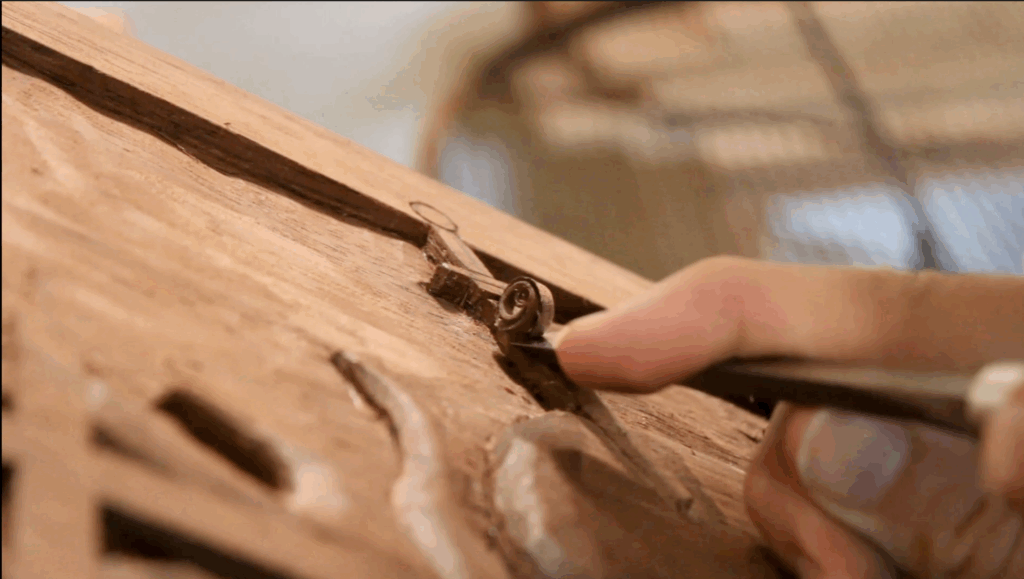
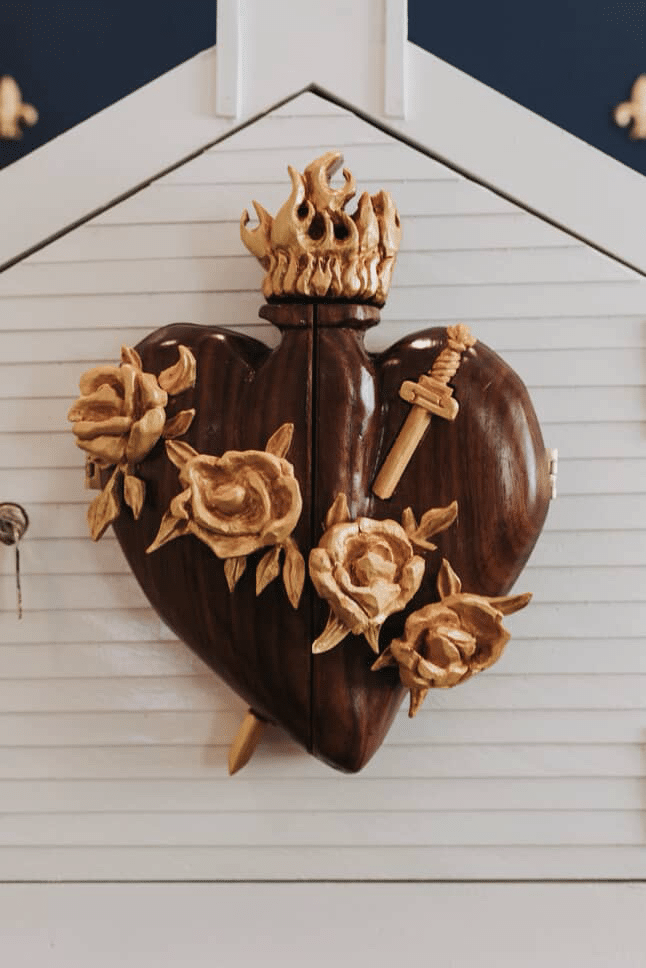
He’s currently working on a project for his local church: a sort of cabinet that a layperson can open to reveal the monstrance, so people can still come to adoration even if no priest or deacon is available to expose the Eucharist. The oak is stained to match the pews, and it will be plain on the outside; but the inside will be painted and gilded, and reveal an image of Our Lady of Knock.
The pastor hopes the otherwise unadorned church might someday be renovated into something more ornate — maybe even transformed into a cruciform shape. So the piece Coleman is working on is designed to fit the space as it is now, but also to work well with a more traditional and elevated style should that come about in the future.
Something for now, and something for the long term, too.
Beauty with meaning
Another element the Colemans take into account: the natural materials that surround them. A church in Italy might be made of marble, not only because it’s beautiful, but because that’s what could be mined directly from nearby hills.
“But there are no rocks in Louisiana,” Andrew said. “Our natural resource is trees. We have lots of cypress and pine.”
It’s more convenient and cost-effective to use local materials, and it’s also more meaningful.
“The land makes the people,” Coleman said. It’s fitting that their church should reflect who they are, down to the building material itself. Using local wood helps strengthen the ties between the artist, the community and the congregation.

Because their business is almost all commission-based and tailored to the individual needs of their clients — from a lion-shaped reliquary for a first-class relic of St. Mark to a series of panels depicting the Seven Sorrows of Mary that together form a cross, to kneelers incorporating both fleur-de-lis and the ark of the covenant — Coleman’s Woodworking doesn’t have a specific house style – except that every detail is significant.
Coleman admires elaborate baroque and rococo styles, and would love the chance to carve that way some day.
“But it’s a lot of lines and curves and shadows that take weeks and months to carve, that often don’t even have that much symbolism,” he said. They’re beautiful, but ultimately, they’re just decoration.
“If I’m taking the time to make something, I want it to mean something,” he said.