In 1928, the Democrats nominated New York Governor Alfred E. Smith for president. Smith was a Catholic, practicing, and proud of it.
Outrage swept the country. Protestants were very much a majority in this country, and a virulent, at times hysterical, anti-Catholicism was common.
The Republican candidate was Secretary of Commerce Herbert Hoover, who eventually won the election. To his credit, Hoover never mentioned religion, but many of his supporters made Catholicism the issue.
Among them was a prominent United States senator from Idaho named William Borah, who went around the country condemning Smith, chiefly because he was a Catholic.
One morning Senator Borah arrived in Memphis by train, for a speech that evening. Former Memphis mayor Edward H. Crump, a respected and highly influential figure in the city, was on the platform.
The senator stepped off the train, and Crump smiled warmly, shook his hand and welcomed him to Memphis. Crump offered to take Borah to his hotel but said that first he wished to show the senator the city.
The senator, probably hoping that Crump, a staunch Democrat who happened to be Episcopalian, was deserting Smith, agreed.
First stop: Memphis’ Catholic cemetery
Crump’s driver took them directly to Calvary Cemetery, a Catholic cemetery not included on any tourist’s sightseeing list.
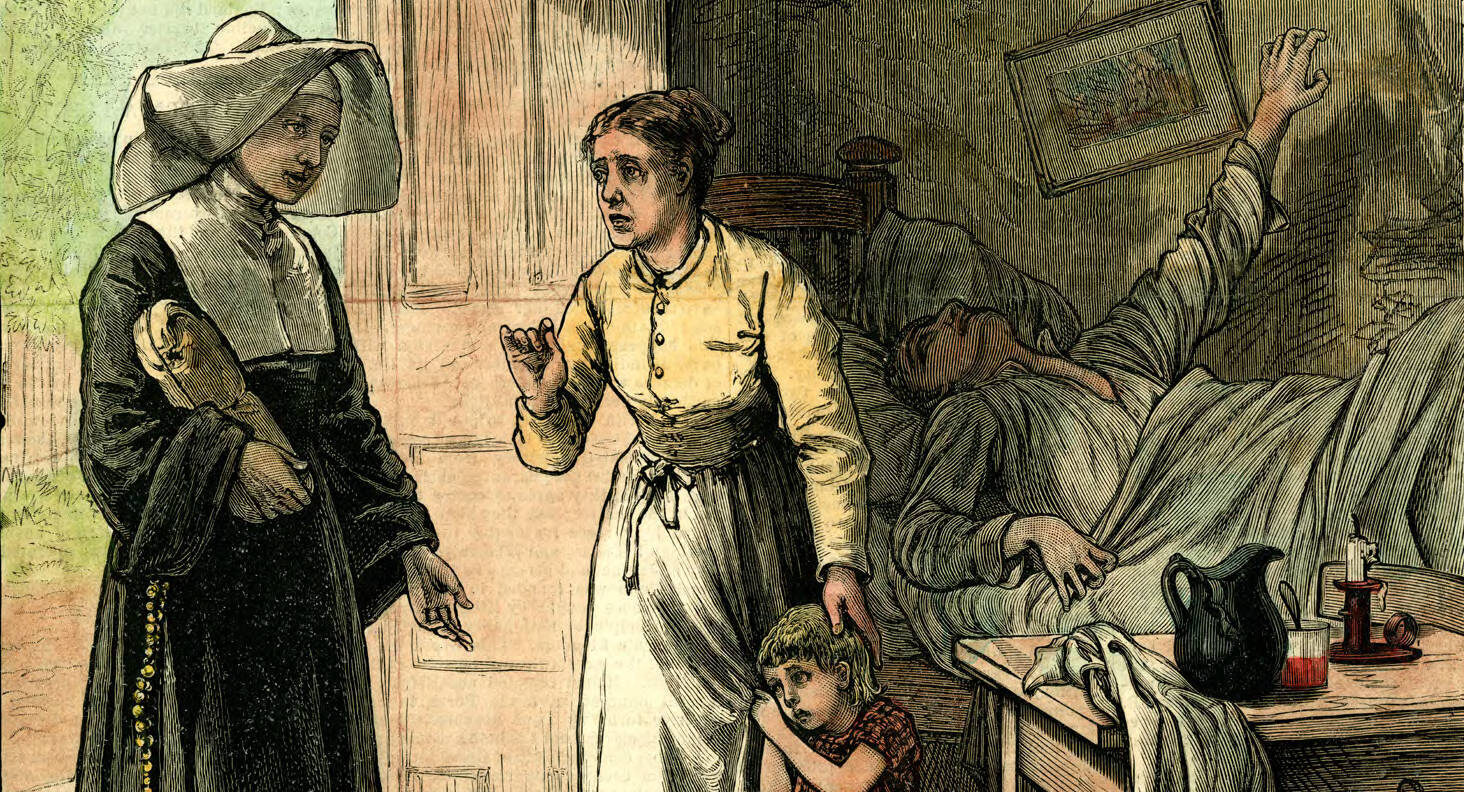
Inside the cemetery, they drove straight to the graves of all the priests and religious sisters who cared for the sick and dying during Memphis’ devastating yellow fever epidemics in the 19th century. Many sisters had served at the city’s Catholic hospital, which never turned anyone away.
Scores of parents of small children died in the epidemics. The Church opened an orphanage to give these children a home, security, education, dignity and hope.
Pointing to the graves, the former mayor said, “Senator, in Memphis, the words ‘Catholic Church’ call to mind these priests and nuns who literally died helping people.”
He was right. Priests and sisters willingly died while serving rich and poor, young and old, Black and white, natives of Memphis and immigrants.
Partly because of their Christianity, Memphis survived.
“If you give your speech tonight, Senator,” Crump continued, “I will be there, prepared to denounce you publicly as a bigot for insulting good people who died because they were genuine Christians, or we can return to the station, where you can board the next train leaving Memphis. We do not want the likes of you in our city.”
The high and mighty senator said, “Take me to the station.”
Catholics have earned our voice in the national conversation
Across this country, Catholics have always assisted people in need, even when it is risky. It is the legacy of the Catholic Church in America, a reality since French sisters arrived in New Orleans three centuries ago and opened the first Catholic hospital in what is now the United States.
A monument in Washington honors the religious sisters who nursed wounded soldiers, from both sides, during the Civil War.
The country reverently recalls the four military chaplains who stayed with men doomed to drown after their transport ship was torpedoed by a German submarine in the Second World War. Among them was Father John P. Washington, from the Newark archdiocese.
St. Frances Cabrini, Servant of God Dorothy Day, St. Katharine Drexel, Servant of God Edward Flanagan of Boys Town and countless others made the Gospel visible and bettered this society. The United States decidedly would be less admirable without them.
They truly were Christians. As Pope Leo XIV insisted in his first general audience, the Christian responsibility to love all others reflects Christ’s love for all, never qualified or affected by anyone’s seeming “worthiness” for such attention.
Questions in the current national conversation — questions about abortion, marriage, immigration, gender, foreign relations, government spending, and so on — have moral implications for Catholics. And Catholics have earned the right to say anything about public policy or social customs that they wish to say. They are still earning the right every day.